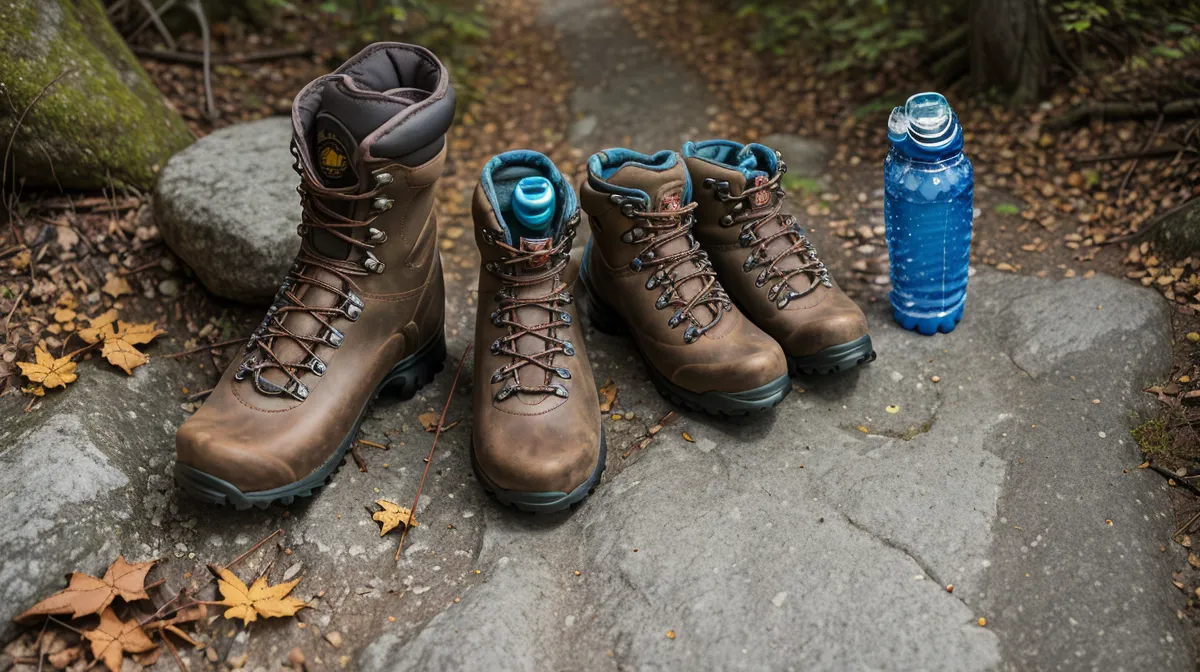
The car door swings open at the Middlesex Fells lot and I'm already standing, no gripping the frame, no test-stepping onto the gravel before trusting the hip to hold.
Quick disclosure before the numbers start: some of the links below are affiliate links, and I earn a small commission if you buy through them — doesn't cost you anything extra, and I don't put anything in this rundown that hasn't earned a spot in my own gear closet.
Two years into treating joint health like a real budget category, the math finally makes sense. Active aging after fifty isn't a mystery or a mood, it's line items: shoes, tools, supplements, and time, each with a cost and a return. This is the ledger, not the pep talk.
What Actually Goes on the Mobility Budget
Here's the breakdown, roughly in order of what hit the wallet first: footwear, trekking poles, a supplement or two, and then the free stuff — timing, diet, and the exercises nobody has to buy. Mobility budget sounds like a strange phrase for a hiking habit, but once the hips start complaining, that's exactly what it becomes.
Footwear: The Line Item I Underpriced First
Cheap trail shoes were the first mistake, a clearance pair that looked fine in the store and turned into blisters and a hip that ached for two days after one short loop. Cost more in recovery than it saved at checkout.
Before the shoes, there was a compression sleeve — snug enough to leave a mark by lunchtime, promising support it never delivered on uneven ground. It went back in the box within a week.
Desk hours don't help the case either. Hips that spend most of a workday folded into an office chair aren't warmed up for a trail, no matter how good the shoes are.
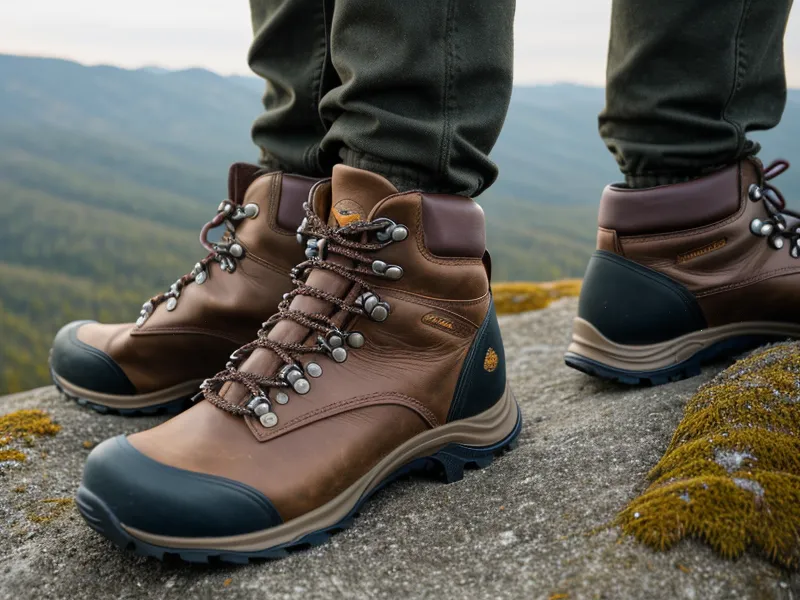
What actually worked was less about the brand and more about fit — a stability build with an insole matched to how the foot strikes, chosen with help from someone who fits shoes for a living instead of grabbed off a clearance rack. Cushioning also breaks down long before the outside of a shoe looks worn, so a replacement pair belongs in the budget before the old ones go flat.
Why Trekking Poles Pay for Themselves
Poles were the cheapest fix that made the biggest difference, and yes, they pay for themselves fast. On a downhill stretch, poles can cut the compressive force on the knees by up to twenty-five percent. That's not marketing; that's physics, redistributing load through the arms instead of dumping all of it through the knees with every step down.
Descending is where knees actually take the hit, working to brake the body with every step down rather than just holding weight the way they do on flat ground — poles take a chunk of that braking job off the joints. My neighbor Jim, who grumbles the entire uphill but has never once bailed on a planned walk, finally picked up a pair after watching me stop wincing on the way down from the Fells. Now he's the one lecturing newcomers about proper pole height.
Where the Supplement Line Actually Sits
Supplements are where the budget gets philosophical. My focus these days is on synovial fluid — the fluid inside a joint that's supposed to keep things moving smoothly — rather than the classic glucosamine route. That classic route still has a place: JointVive pairs glucosamine with chondroitin, the most studied combination out there, and if it's worked for you before, there's no reason to abandon it. What I chase now is hyaluronan, one of the pieces involved in that lubrication — whether it's thinning cartilage or just lubrication running low is a different question for a different budget line, but lubrication is the one I'm tracking here.
Joint Genesis [My Daily Pick] is the one that actually earned a permanent spot on the shelf — one capsule, once a day, no juggling three bottles before coffee. It isn't the cheapest option in the lineup, running around a dollar fifty a day at single-bottle pricing, and results build slowly enough that budgeting at least two months before judging it matters. It fits right into the Sunday prep routine that keeps the rest of the week on track, which is half the reason it actually stuck.

Free Line Items: Timing, Diet, and the Exercises That Cost Nothing
Not every line item costs money. Joints that feel stiff first thing in the morning loosen up substantially by early afternoon, so timing a walk around that window is a free adjustment most people skip entirely. Diet is the other free line: cutting back on the foods that seem to feed inflammation didn't fix anything by itself, but it lowered the baseline enough that everything else (the shoes, the poles, the capsule) had less to work against.
Some of this is emotional accounting, not physical. Trading a big loop for a shorter one used to feel like giving something up, and I wrote more about that emotional weight of slowing down than expected. A reader named Elaine, who writes in from western Massachusetts, pushed back on that framing once — she argued it isn't slowing down at all, just trading one version of active for another, and she wasn't wrong.
Flexibility and mobility get treated like synonyms, but they're separate budget lines — flexibility is how far a joint stretches, mobility is how well it moves under control through an ordinary day, and most hiking trouble turns out to be a mobility gap rather than a flexibility one. Closing that gap didn't take heavy weights, just controlled movement added gradually, which is the whole idea behind Ageless Knees exercises. None of it involves real impact either, which matters more the longer this goes on.
Evenings get one more low-cost addition — a specific stretch that targets a nerve pathway along the front of the hip, the kind most generic routines skip entirely. It costs a few minutes, not a purchase.
What the Budget Actually Buys
None of this works as a substitute for the other. Supplements can support what's happening inside the joint, but they don't replace the mechanical work of poles, shoes, and movement — that boundary is worth remembering before spending on either side of it while ignoring the other. If a knee or hip starts complaining on every outing, the fix usually isn't one purchase, it's the combination — better shoes before another bottle of anything, poles before a program, and only then a supplement layered on top. The one that's stayed on the shelf longest is still Joint Genesis, mostly because it's the layer that made the mechanical work easier to keep doing, not a replacement for it.