Ninety percent of my body weight disappears the second the water closes over my collarbone. That's the whole case for treating the local pool as a real joint-health strategy for staying active after 50, not a backup plan for days when a trail is off the table, but a tool that does something hiking simply can't.
A reader named Elaine, who emails me every so often from western Massachusetts, asked the question flat out a few weeks back, hiking or swimming, which one actually protects the joints. Here's the short version I owed her: hiking keeps the mobility a pool can't touch, swimming protects the joint on days when impact would just be punishment, and the test I actually use is simple, if my hip stays quiet, I hike, and if it's already talking before I've laced a boot, I go to the pool instead of pushing through on hope. Everything below is just the reasoning behind that one line.
The Descent Bill Every Hiker Pays
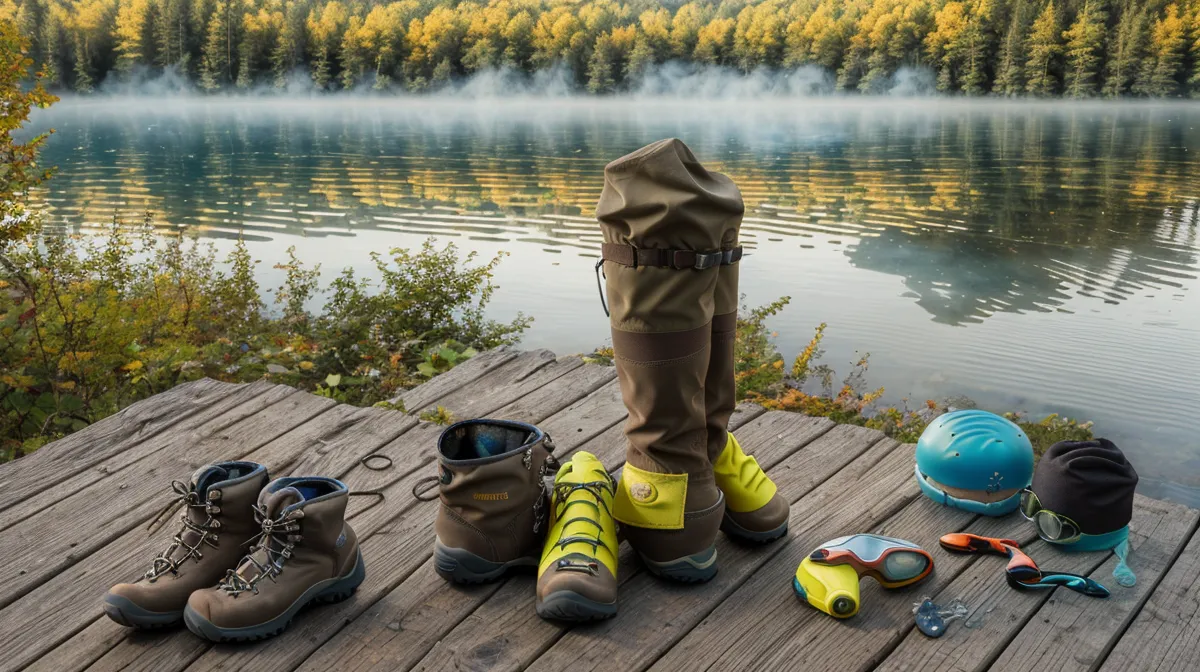
Hiking charges you on the way down, not the way up. The climb works the muscles; the descent is where the joint takes the real hit, step after step of body weight landing through a knee that's already tired by the time the trailhead is back in sight. Boots help for a while, then they quietly stop helping; the cushioning underfoot breaks down long before the leather on top shows any wear, which is its own rabbit hole I've gone down elsewhere on this site. None of it is helped by a week spent folded into a desk chair beforehand. Hips that sit for eight hours a day are not hips that want to suddenly cover six miles of uneven ground.
For a stretch, my fix was ice. Get back from a hike, prop the hip up with a bag of ice while catching up on work email, call it recovery. It did nothing beyond making my hip cold for twenty minutes before the ache came right back. What actually changed something was swapping some of those miles for laps.
Why Water Removes the Load but Not the Workout
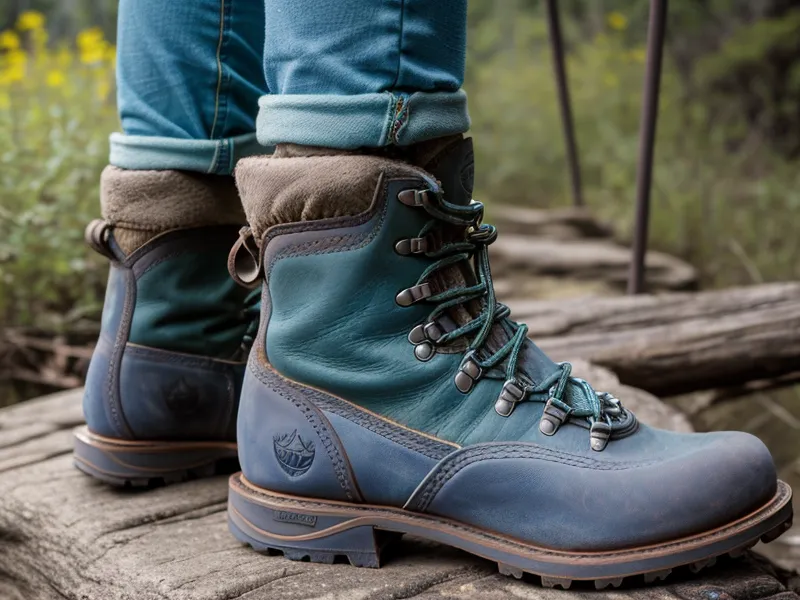
Submerged to the neck, that ninety percent of body weight is gone, which is the whole reason a joint that grinds on pavement can move through its full range in a pool without complaint. What surprised me is that easier on the joints didn't mean easier on the muscles. Water pushes back roughly twelve times harder than air, so the resistance is still there, just spread out instead of stacked on impact. It's a way of building real strength without ever touching a dumbbell, which is a habit worth more than it gets credit for once your knees start keeping score.
So Which One Actually Protects Your Joints?
That one-line test from Elaine's email holds up better than a rule I made up on a bad day. Hiking is the only one of the two that trains balance on uneven ground, ankles adjusting to roots and rock on a trail like the one through Borderland State Park, the kind of full-body coordination a pool simply can't ask of you. Swimming's whole advantage is removing load without removing effort, which matters most exactly when a joint is already inflamed and doesn't need one more session of impact stacked on top of it. Picking between them isn't about which is objectively better. It's about which problem you actually have that day.
Finding the Combination That Actually Stuck
My neighbor Jim tagged along to Borderland State Park a few Saturdays back and spent the first mile critiquing the lug pattern on my new boots before he'd even asked how my hip was doing, that's just how Jim operates. We kept it to a soft-dirt loop, poles doing some of the work on the downhills so my knees weren't taking the full bill alone, then I went straight to the pool that same afternoon for a shorter swim than usual. One Monday not long after, I got up, got to the stairs, and realized halfway down that my hip hadn't said a single word yet, no stiffness announcing itself before I'd even had coffee. That's not flexibility exactly, and it isn't pure strength either. It sits in a gray zone most people never bother separating out. Whether the improvement is the joint itself healing or just better lubrication doing its job is a question for a more clinical article than this one. Some evenings I still work through a stretch routine with a resistance band pulled from the basket by the door, mostly for a hip flexor that never got the memo about any of this, and I've started paying more attention to what I eat the night before a long hike than I ever used to, since a sluggish morning does the trail no favors either.
What's Actually Worth Taking, and What Isn't
There's a synovial fluid question underneath a lot of this, tied to something called Hyaluronan, and I'm not going to pretend I understand the chemistry past that, I've gotten into the mechanics of it elsewhere on this site. What I know is what I take: one Joint Genesis capsule most mornings, and it's held up well enough through a full season of trail-and-pool weeks that I keep reordering it. It hasn't erased the creaky mornings entirely, nothing has, but it feels like it gives the swimming a head start. If the bone-on-bone feeling is what's stopping you, I got into that more in why I finally stopped fighting my joints and started feeding them.
I also went through a stretch with JointVive, which leans on the more classic glucosamine-and-chondroitin route instead, a reasonable pick if that combination has already worked for you before. For my specific hip stiffness, the lubrication angle won out, but that's a personal call, not a verdict on the ingredient itself.
Not Every Joint Gets the Same Trade From Water
Not everyone gets the same trade from the pool, either. A woman I met once at the rec center mentioned that hydrostatic pressure, the same force that supports my joints, made it harder for her to breathe with her limited lung capacity, so the deep end was never going to be her answer. For days like that, or just days without pool access, Ageless Knees is the no-pill, no-pool option I point people toward, home exercises instead of a supplement or a swim. I wrote more about that side of things in why I use Ageless Knees for the days the pool isn't an option.
The Life This Actually Adds Up To
These days it's a hybrid life, a trail loop at Borderland State Park most weekends, laps at the pool on the days my hip votes for it, and I've had to make peace with what that shift meant, which I got into more in moving past the grind. If your knees start barking every time you look at a flight of stairs, the fix isn't picking hiking or swimming once and sticking with it forever. It's checking in with the joint that day and matching the activity to what it's actually telling you. For the internal half of that equation, Joint Genesis is still the one sitting on my kitchen counter every morning, and it's played its part in making sure the pool sessions actually stick instead of turning into one more thing I quit.