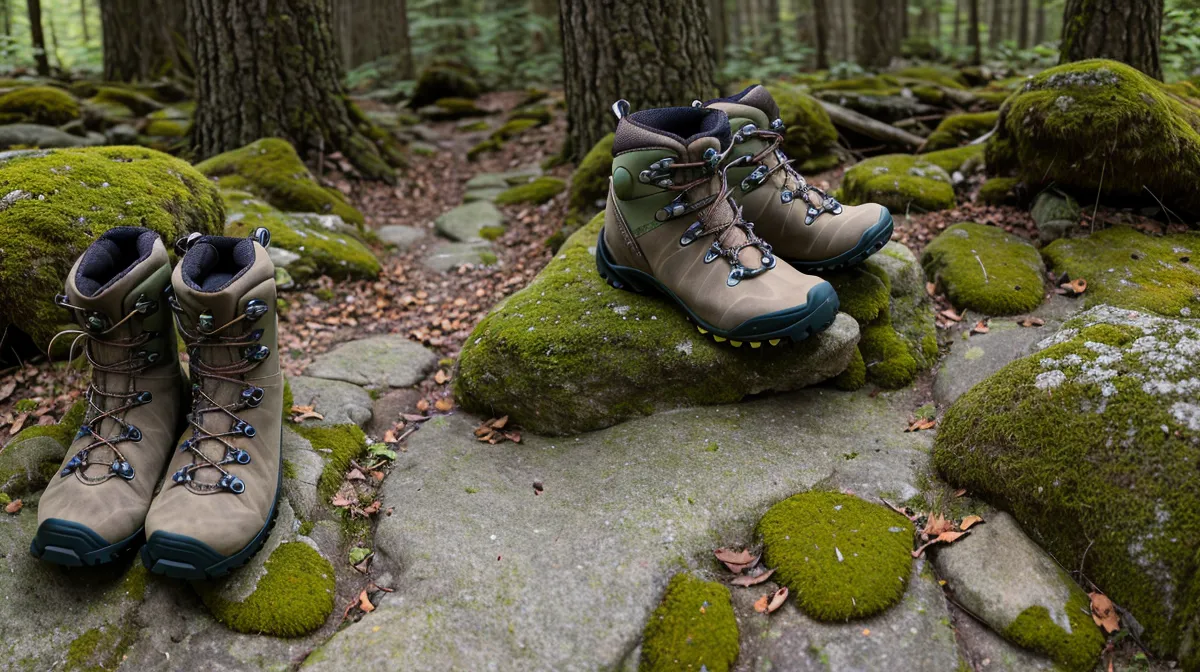
Halfway down the rocky stretch at World's End, I stop, plant my heel, and bounce once on my toes to feel how the boot answers back. No twinge. No bracing. Just my foot doing its job and my knee staying out of it. That little bounce is why I rebuilt my whole approach to hiking gear around my knees. It's the thing friends my age ask about more than anything, usually the second their own knee health comes up. Active aging, for me, comes down to one stubborn refusal: I'm not giving up the trail just because the trail got harder after twenty years of weekend hikes.
A friend who spends her Saturdays on the golf course once asked me why I quit slapping a lidocaine patch on my knee before every hike. The honest answer: I fixed the boots instead of numbing the joint. I'm no doctor and no physical therapist, just a hiker who got stubborn, so please check any big change with your own. What follows is the set of questions people actually ask me, usually in the parking lot, usually while we both stall before the climb.
Does the weight of the boot really reach your knees?
Short answer: yes, far more than it should. Weight sitting on your feet drains you and loads your joints harder than the same weight riding in your pack. My old leather boots were the buy-them-once, bury-me-in-them kind. Indestructible. Gorgeous, weathered brown. I finally set them on a kitchen scale and they came in around three and a half pounds for the pair.
Every stride, my knee turned into the hinge swinging that weight forward and back. Two miles in, my hips were cooked — and for years I blamed my age when the real culprit was strapped to my feet.
Here is the rule I hand everyone now: pick the lightest boot that still grips the ground you actually hike. Don't pay in weight for traction you'll never use. Deep lugs and stiff armor weigh something, and your knees cover that bill with every step.
Stiff ankle support is mostly a myth after fifty
We were all taught that real hiking means tall, stiff boots that lock the ankle like a cast. For a lot of us past fifty, that advice quietly works against us. When the ankle can't flex, the shock from each footfall doesn't disappear; it climbs straight up to the knee.
Think of the boot as a shock absorber, not a suit of armor. Going downhill already pounds the knees far harder than strolling the flat, and a board-stiff sole hands them the full hit off every rock and root. The test is dead simple: if you can't flex the sole at least a little with your bare hands, that boot is going to make your knees do its job for it.
And it isn't only the boots. Start the day stiff from hours at a desk and your hips are tight before the first step, which leaves the knees picking up slack they were never built to carry. On desk-heavy stretches I lean on the best exercises for stiff knees after sitting at a desk all day to loosen things first; otherwise I'd undo that work the moment I lace up.
How do you tell when a midsole is worn out?
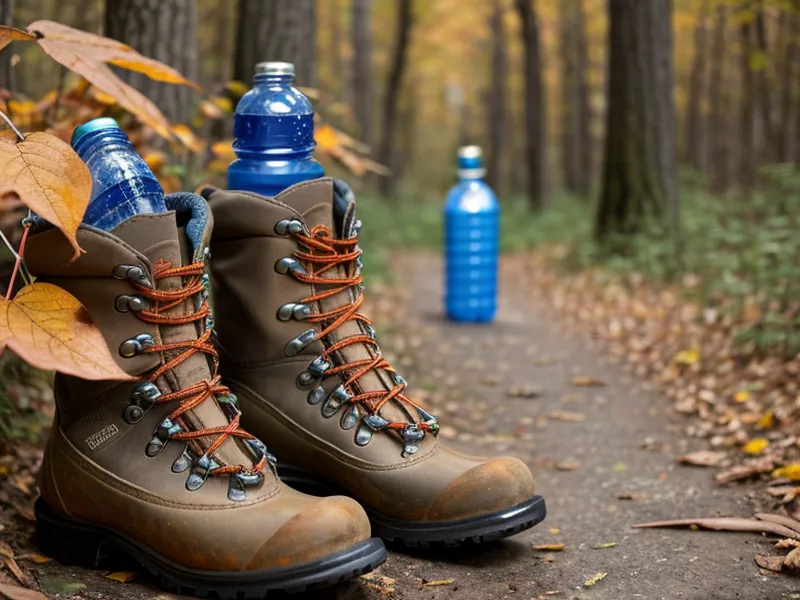
This is the question almost nobody thinks to ask, and it's the one I care about most. The midsole, that layer of cushion between your foot and the trail, is usually EVA foam. It's the part that soaks up the pounding your knees would otherwise swallow.
Here is the catch with foam: it doesn't last forever. Miles flatten it, and so does plain age sitting in a dark closet. After enough seasons it stops springing back and just packs down dense. The tread on the bottom can look brand new while the cushion inside has quietly gone dead, like a mattress that still looks fine but lost every bit of its bounce.
So when someone swears their knees ache in boots that "still look great," the boots are usually the problem. Press a thumb hard into the midsole. If it feels stiff and lifeless instead of springy, or an old favorite starts aching your knees on easy, flat ground, the foam is spent. Fresh laces won't bring it back. A new pair will.
Reading the wall of hiking gear without losing your mind
Walk into any gear shop and the wall looks like a candy rack of colorful, sneaker-ish shoes that barely resemble the boots we grew up in. Don't let it rattle you. You're really feeling for five things, and most of them you can sort out right there on the store carpet.
Weight comes first. Heft a pair in each hand and trust the lighter one. Cushion comes next: you want a midsole that feels soft but lively under your thumb, never hard. A lower heel-to-toe drop keeps your weight stacked over the middle of your foot instead of tipping you forward onto your knees. A roomy toe box matters more than people expect, because feet swell and spread on a long descent, and pinched toes change your whole gait, which the knees feel by the last mile. And don't expect a hard insert to rescue a dead midsole; that was never its job.
Try on ten pairs if that's what it takes. Walk the little ramp they keep near the register and feel for your toes jamming forward or your knees tensing. If either happens, set them back on the shelf. We're long past the age of "breaking in" a stiff boot over a painful month. The right pair feels close to right the moment you lace it.
Good boots help, but they aren't the whole story
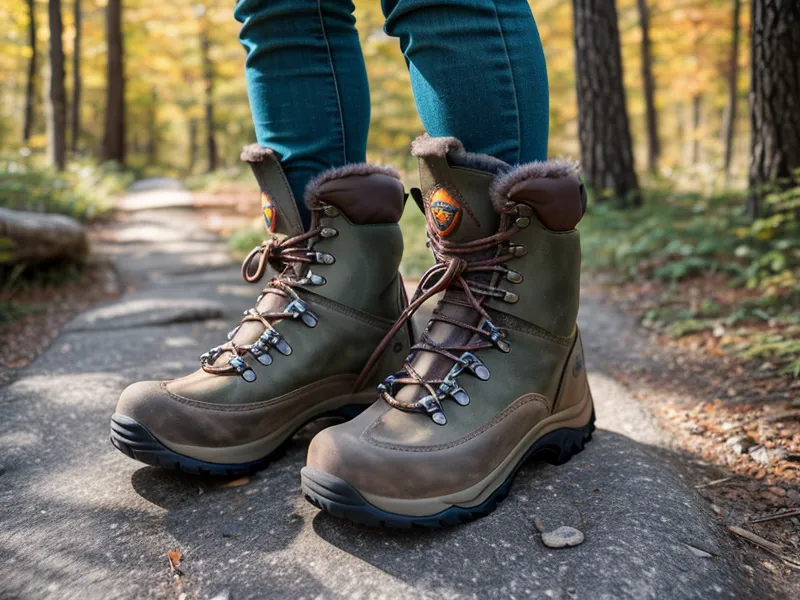
New boots solved more than I expected, but they were never the whole answer. Pair a good pair with trekking poles and you take even more load off the knees; that's a whole other conversation. Footwear is one lever among a few.
Pain management took longer to sort out. These days I'd rather ease a flare with the best natural alternatives to ibuprofen for chronic joint pain over 50 than numb it and march on. Supplements humbled me, too: the glucosamine tablets I leaned on for ages did nothing I could honestly feel in my knees, which is exactly why I went and compared JointVive vs Standard Glucosamine looking for something that earned its keep. None of it replaces decent footwear. It just keeps the boots from carrying the whole weight alone.
There's an ego hit in trading heavy mountaineering boots for something that looks like a colorful high-top sneaker. It can feel like waving a white flag. I do miss being the woman who grabbed any boots and bolted out the door without a thought for drop or cushion. Standing at a trailhead wincing, though, was never the badge of honor I told myself it was.
The proof I trust isn't on any spec sheet. It's that I can stand at the kitchen counter with my morning coffee and not catch myself rocking from one foot to the other the way I did when my knees were angry. Adapting isn't quitting. If the right boots mean I take the gentle loop at World's End instead of the long ridge, and I get to come back and do it again tomorrow, that's a trade I'll make every time. Pick the boot that lets you keep showing up. Not the one that looks toughest in the photo.